• Skip to primary navigation
  • Skip to main content
  • Skip to primary sidebar

The Digital Dispatch

From NOEBIE.net

  • Home
  • About
  • Facebook
  • Flickr
  • IG
  • YouTube
  • Kirtan
  • Tarot
  • Spirit

Brian K. Noe

Notes on the Question of the State

Brian K. Noe · October 14, 2018 ·

A dear friend and correspondent of mine, Alan Hodge, sent me some food for thought this weekend. It was essentially a criticism of the orthodox Marxist notion of the “dictatorship of the proletariat.”

As a person with a deeply ingrained anti-authoritarian bent, I have studied this question for quite awhile, and continue to struggle with it. Here are some notes outlining my current reasoning of the matter.

Is the establishment of a workers’ state necessary to the project of human liberation?

First, let’s be clear about what we mean by “the state.” It is essentially an institution which uses force or the threat of force, implicit or explicit, to coerce people into obedience. This sounds inherently evil to a lot of us, and we’ve certainly witnessed real life evil perpetrated by the state throughout history and in our own lifetimes. No wonder that it is tempting to simply dismiss any approach to revolution which advocates seizing and wielding state power as part of the plan.

Here’s why we must not only resist, but reject that temptation. The current ruling class already has these means of coercion at their disposal, and time and again have shown no hesitation to employ them. They will not give up their position voluntarily. They will cling to power down to the last tooth and nail.

Imagine what would have happened if, after the October revolution of 1917, the Bolsheviks had said “Okay, we’re all free now. Everybody cooperate with each other. The state no longer exists.” The old ruling class or another aspiring ruling class would have immediately asserted themselves and seized power. In fact, even with the (albeit deformed) workers’ state in place to act as a bulwark, this is precisely what the reactionary forces, Russian and international, set out to do.

It would be nice to believe, as the anarchists do, that we can establish purely voluntary associations, free of any coercion, to govern society, and that once these organizations are established and federated, an ideal socialist society would take root and flourish without the need for a state. It would be nice to believe in the efficacy of any number of other approaches to worker ascendence, be they cooperatives, or plans to vest workers’ pension funds with control of existing companies’ stocks, or whatever. The fact remains that under any such arrangement there will still be a wealthy and powerful ruling class with which to contend all along the way – a ruling class which enjoys their position of privilege, and will do whatever is in their power to keep it.

Whether we like the idea of a coercive state or we don’t, if we’re going to abandon it as part of the quest for liberty and equality, then we have a responsibility to solve the problem of how to otherwise mitigate the forces of reaction. I’ve not seen a feasible alternative solution proposed to this problem, and, frankly, cannot imagine one.

For those of us who believe that the power of a state will be needed, at least temporarily, in order to achieve human liberation, how can we best ensure against the emergence and entrenchment of new ruling elites?

The notion that Stalin was inevitable has been a part of ruling class ideology and propaganda for three-quarters of a century or more. It is important to reject the inevitability of Stalinism, while at the same time recognizing the danger of Stalinism. The challenge involved in creating deeply democratic structures of power and governance which prevent a new ruling class from putting down roots is daunting. But it begins with how we configure our own organizations of resistance and struggle today. We mustn’t fetishize the models of the Paris Commune or the Russian workers’ councils (“soviets”), but I do think that we can look to them for inspiration. We also need to continue to look at the lessons of history, examine where revolutionaries went wrong in the past, and do our best to create not only structures but cultures of democracy right from the beginning.

Marx believed that it was through the revolutionary struggle itself that the working class would become fit to rule. This may well be the case. It’s not a question to which we yet have a fully satisfactory answer. But unlike the question of the need for a state, there remain, at least, possibilities.

Filed Under: Notes From The Field Tagged With: Anarchism, Authoritarianism, Dictatorship of the Proletariat, Marxism, Stalinism, The State

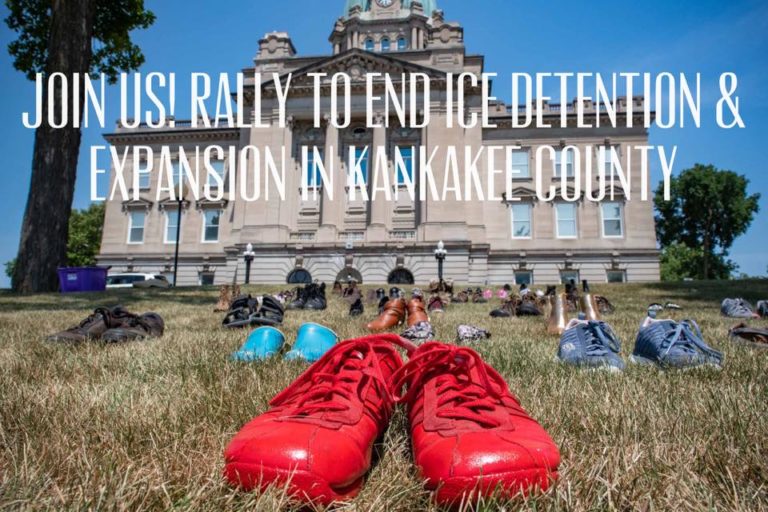
Rally to End Ice Expansion

Brian K. Noe · August 31, 2018 ·

Rally Poster

Join us at the Courthouse at 1 PM on September 1st.

Read More Here: Rally to End Ice Expansion | Connect Kankakee

Filed Under: Curated Links, Events Tagged With: ICE, Immigration, Immigration Policy, Kankakee, Kankakee County, Liberty

For Every Light That Shines

Brian K. Noe · August 17, 2018 ·

Shadow Falls

When I was 16 years old, I went to work as a broadcast engineer at WSOY Radio in my hometown of Decatur, Illinois. I was just completing my freshman year of college, and had gotten my Third Class Endorsed Radiotelephone license from the FCC through a Winter Term course in conjunction with the campus station at Millikin, WJMU. I’d been captivated by radio and by audio technology from a young age, and was elated to be working at “The Sound of Decatur” and to meet the people whose voices I had heard in my home for so many years growing up.

One of the very cool things about WSOY in those days was that the station was a CBS affiliate, so we carried newscasts and other programming from the CBS Radio Network. When I worked evening shifts, I had the pleasure of listening to the CBS Radio Mystery Theater at 9 o’clock each night. I grew to love these spooky radio dramas, and the way they created such vivid images in my head through a well crafted collection of sounds.

I worked at the station all through college before deciding that a career in radio was not for me, though I would continue to work there occasionally on a part-time basis even after moving on to another profession. To this day recording and broadcasting still holds a great deal of fascination for me.

In early 2005, I learned that people were beginning to create and distribute audio content via RSS (the technology behind blogging). I soon joined the ranks of independent media producers all over the world who gave birth to the “podcasting” craze. One of the exceptionally talented visionaries who came to my attention in those early days was named Mark Yoshimoto Nemcoff. Eventually he and I would both come to work for a company that was attempting to monetize the nascent medium. Although I wasn’t directly involved with his groundbreaking production Shadow Falls, I was able to watch his creative process from a fairly near vantage point, occasionally receiving clips of episodes prior to their release to the general public. The series hearkened back to the CRMT that I so loved. The program was especially compelling, knowing the care that Mark took with the production, often recording the foley effects himself, for instance.

For several years, I had been searching the Internet for archives of the show to no avail. A few days ago Mark popped up by chance in my Twitter stream with a post about the follow up production Badlands, and I reached out to see if the original series was available. To my delight, he replied that he had recently posted all six episodes to his weblog.

My daughter is a creative who writes fan fiction and is perpetually obsessed with one or another series of books or teen television programs. It’s fun sharing Shadow Falls with her, and I have to say that the production still holds up well all these years later. Take a listen yourself and see what you think.

Filed Under: Audio, Curated Links Tagged With: Audio, Audio Drama, CBS Radio Mystery Theater, Mark Yoshimoto Nemcoff, MYN, Podcasting, Podshow, Podshow LA, Radio, Shadow Falls, Spooky, Writers

On The Party We Need

Brian K. Noe · August 6, 2018 ·

Each year at the annual Socialism Conference in Chicago, a sort of personal theme seems to develop early on for me. This year, questions around the topic of “the party” bubbled up on the first night. Paul D’Amato spoke about developing “infrastructures of dissent” in a session titled What kind of party do we need?

I posted this comment the next morning on Facebook.

It seems to me that once you say the word “party” people in the United States immediately think “ballot line.” I’m still not clear in my own mind what “party” would mean in real world practice apart from that. Will be looking for some resources on that question while I’m here.

There was an excellent session the next morning called Prelude to Revolution: May of ’68 in France. Sherry Wolf said that the happenings of that May exposed “the limitations of spontaneity and political eclecticism.” The message is that a party of the workers will be needed to lead from radicalization to revolution. I tried to better envision that party. What does it look like? What does it do? Does it participate in elections? If so, how does an organization committed to revolution, not reform, compete within the framework of a system that is reformist (at best) by its very nature? What is the role of the party right here and now? What should be its organizing principles?

I was able to catch up with D’Amato that afternoon and bend his ear for a bit on the topic. As he described the party as he saw it, I asked if it would compete in elections. He didn’t hesitate. “Absolutely!”

He recommended this article on Marxists and Elections from nearly twenty years ago, and I did find a lot of it helpful. Still, there was one question that nagged me. If the electoral activities of the independent party of the working class would be mainly aimed at raising working class demands, challenging and exposing the current government and political economy, and winning over workers to the need for revolution – how is that posed to constituents when seeking office? “We want your vote so we can become part of this system of government, because this system of government is so fundamentally corrupt that it has to be dismantled.” It seemed to me sort of like speaking to a mechanic who wants your business, and the mechanic saying “This car is really irreparable. You need a new car. It can’t be fixed. But you should bring it in to me anyway.”

If the end goal of the party is revolution, and that’s not being hidden, why should a worker who is not yet convinced of the need for revolution support the candidate of such a party? What would that party pledge to do once in office?

Todd Chretien’s Saturday session on the Vanguard Party, Democratic Centralism and Workers’ Revolution was a helpful review of theory and history, and the discussion that followed highlighted the distinction between the more or less orthodox Marxist view (as described in Todd’s talk and Paul’s article linked above) and the view of socialists (including many in DSA) who take a more flexible approach when it comes to the question of how to participate in elections.

I continued to read and ponder after returning home from the conference. Eric Blanc’s article about the Minnesota Farmer Labor Party was intriguing. The history he outlined is being cited by many who oppose (or who are rethinking) the need for a “clean break” from the Democrats. This essay from Joe Allen presented some helpful perspective, as did the entire series at Socialist Worker discussing and debating the relationship of socialists to the Democratic Party in the wake of Alexandria Ocasio-Cortez’s primary victory in New York.

So I read and thought, and asked friends for their ideas, but really couldn’t come up with a satisfactory answer to the Catch-22 outlined above – until it finally came to me during a meeting of local activists from Connect Kankakee as they were planning a rally to end ICE expansion in our county. A lot of the organizing effort was aimed at encouraging turnout for the event. It occurred to me that we don’t simply work for large numbers at events like this because we enjoy the company of a crowd. It’s a demonstration of power, represented in numbers. The size of the gathering is a representation to office holders in our county that our goals are priorities for the community. It’s also a message of comfort and confidence to those who are endangered by ICE, and to those of us who are organizing resistance.

One can look at elections in the same way. They are an opportunity to measure the proportion of strength for socialist ideas, and, as Engels put it, to “gauge of the maturity of the working class.” This seems to me a purpose that even those who have not yet been won to revolutionary consciousness could support. “We want your vote in order to stand up fearlessly to the powers that be, and to bring your voice, loud and clear, to the very halls of government.”

If you’ve read thus far and are now thinking “duhr,” please accept my apology. This seems like an obvious point in the present moment, but it truly did confound me until recently.

We’ll be discussing this issue at some length on the night of August 15th at our monthly Jacobin Reading Group meeting. Come join us!

Filed Under: Notes From The Field Tagged With: Elections, Politics, Socialism, The Party

Quick Thoughts on the “Dirty Break”

Brian K. Noe · July 24, 2018 ·

The historical precedent for this strategy presumes that there must first be an independent organization of the working class. One that is cohesive, disciplined, powerful, and ready to guard its independence with ferocity. If such an organization were to exist today, then perhaps that organization could use a major party ballot line to further build power and momentum for a few years prior to a pre-planned break.

It is silly, in my view, to try to shoehorn any of the current crop of folks who are using the Democratic Party ballot line, into a strategy which requires conditions that don’t currently exist.

In other words, if you’re citing the prospect of an eventual break from the Dems as part of your justification for supporting a candidate with a D beside their name, thinking that power will be built first within the two-party system and then lopped-off in a way that it will accrue to an independent party of the working class, I think that you have it precisely backwards.

Filed Under: Notes From The Field Tagged With: Democrats, Dirty Break, Politics, Third Party

People Get Ready

Brian K. Noe · June 27, 2018 ·

Here is what won last night in New York’s 14th District:

  • Medicare for all (including medicine, vision, dental and mental health care)
  • A universal jobs guarantee
  • Fully funded public schools and taxing Wall Street to support tuition-free public universities and trade schools
  • Housing as a human right
  • Ending the War on Drugs, demilitarizing the police, abolishing for-profit incarceration
  • Abolishing ICE, protecting DREAMers, simplifying the path to citizenship
  • Investing in 100% renewable green industry
  • Clean campaign finance
  • Peace

This is Alexandria Ocasio-Cortez‘ platform. She walloped a long-tenured, establishment Democrat who spent $3 million dollars to try to stave her off. She did it on a shoestring, running openly as a socialist, and a “card-carrying member” of the DSA.

The lesson here is not that “progressives” can “run to the left” in Democratic primary elections and win. The lesson is that more and more people are ready to abandon the politics of “let’s be reasonable.”

Medicare for all? Yes, please. Guaranteed jobs? Why not? Abolish ICE? It’s high time, and don’t let the screen door hit you on the way out, fellas. Housing as a human right? Makes sense. Everybody needs a home. Good education for everybody? Green jobs? Stop putting an entire generation of young black men in prison? Of course.

Queue “Eli’s Comin'” and turn it up loud. Here’s to a new world.

Filed Under: Notes From The Field Tagged With: 2018 Elections, Alexandria Ocasio-Cortez, Democratic Socialists of America, DSA, Elections, Socialism, U.S. Elections

Thoughts on the Rule of Law

Brian K. Noe · June 19, 2018 ·

If it weren’t so infuriating, it would be laughable when people talk about the law, and the sanctity of the law, and the rule of law, with regard to immigration. We have long since abandoned the rule of law in this country.

Let’s also not fool ourselves about “equality under the law.” Our entire legal framework, institutions and code have been established by a ruling class to protect their own interests.

To pretend otherwise is a cruel, macabre, sickening joke.

Filed Under: Notes From The Field Tagged With: America, Hypocrisy, Immigration, Law, Rule of Law, Ruling Class

Some Initial Thoughts on Gun Regulation

Brian K. Noe · March 23, 2018 ·

I’ve been thinking a lot about the sorts of gun control measures that I could support. I’ll probably be posting about this in more detail at some point, but here is a quick list of ideas that I think might be helpful, and might find wide popular support, even among people who keep guns.

  1. increased liability for gun manufacturers
  2. restrictions (or an outright ban) on certain types of gun advertising
  3. mandatory insurance requirements for gun owners
  4. a national registry
  5. required training and/or proficiency testing
  6. age requirement for gun ownership (21)
  7. waiting period for purchase

Some of these ideas are modeled on how we deal with alcohol, tobacco, etc. Some on how we approach automobile safety. All of them are aimed at being an effective deterrent to the sorts of tragedies that we see so often of late, while avoiding the most odious concerns expressed by those of us (on both the left and right) who care about the rights of oppressed people, self-defense, liberty, tradition, or what have you.

National registration and the age requirement are probably the most controversial of these ideas.

In the area where I grew up, people often start hunting as teenagers. This would still be possible, in that guns for hunting, range shooting, etc., could be allowed to be in the possession of someone under 21, so long as they have had adequate safety training, proficiency testing, and are under the supervision of a qualified adult. Again, this is not much different than what we do with drivers’ permits (although obviously the age I suggest for ownership is more advanced).

As to a national registry, I know that this suggestion sets in motion all sorts of paranoia, and (anti-historical) visions of Hitler confiscating guns so as to reduce people to sheep. I’ll have more to say about this later after more extensive research, but for now, let me just note that my shotgun purchase was registered with the State of Illinois when I bought it decades ago. No one has yet come to my house to take it. Even in Australia, where they have adopted strict licensing requirements, established a national registry, and instituted a 28-day waiting period to buy guns, they didn’t *confiscate* guns. With all of the precedents for gun registration in the world, so far I haven’t been able to find an example of widespread confiscation as a result. And, frankly, if the people with all the tanks and other advanced weaponry decided to turn them on the broader American populace, I doubt that a registry would make much difference. They certainly haven’t needed a gun registry to wreak havoc and death all over the Middle East, or on the streets of our own cities.

I may eventually be persuaded that some of these ideas are flawed for one reason or another, but they are at least a starting point.

Filed Under: Commentary Tagged With: Gun Control, Gun Regulations, Guns

Dealing With Digital Harassment

Brian K. Noe · March 16, 2018 ·

Speak Up & Stay Safe(r):

A Guide to Protecting Yourself From Online Harassment

safety illustration

This guide is for anyone who fears they might be targeted, or who is already under attack, for speaking their mind online, but is especially designed for women, people of color, trans and genderqueer people, and everyone else whose existing oppressions are made worse by digital violence. It details best security practices for social media, email, online gaming, website platforms, and ensuring privacy of personal information online, as well as the documentation and reporting of harassment, and caring for yourself emotionally during an online attack. You don’t need any specialized knowledge to use this guide – just basic computer and internet skills.

Source: Speak Up & Stay Safe(r): – A Guide to Protecting Yourself From Online Harassment

Filed Under: Resources Tagged With: Harassment, Online Activism, Online Safety, Security

Remembering Rosa Luxemburg

Brian K. Noe · March 5, 2018 ·

Born on this Date in 1871

Rosa Luxemburg

“Those who do not move do not notice their chains.”

Filed Under: Quotes Tagged With: Communism, Heroes, Rosa Luxemburg, Socialism

  • « Go to Previous Page
  • Page 1
  • Interim pages omitted …
  • Page 10
  • Page 11
  • Page 12
  • Page 13
  • Page 14
  • Interim pages omitted …
  • Page 73
  • Go to Next Page »

Primary Sidebar

FREE SPEECH PRACTICED HERE
Linking does not necessarily constitute endorsement.

Categories

  • Audio
  • Commentary
  • Curated Links
  • Essays
  • Events
  • Explaining Socialism to Kids
  • General
  • Interviews
  • Lest We Forget
  • Memes
  • Music
  • News
  • Notes From The Field
  • Other Content
  • Pictures
  • Podcasting
  • Poetry
  • Projects
  • Quotes
  • Reports
  • Resources
  • Video
  • What I'm Reading
NWU Logo

Copyright © 2026 · Daily Dish Pro on Genesis Framework · WordPress · Log in